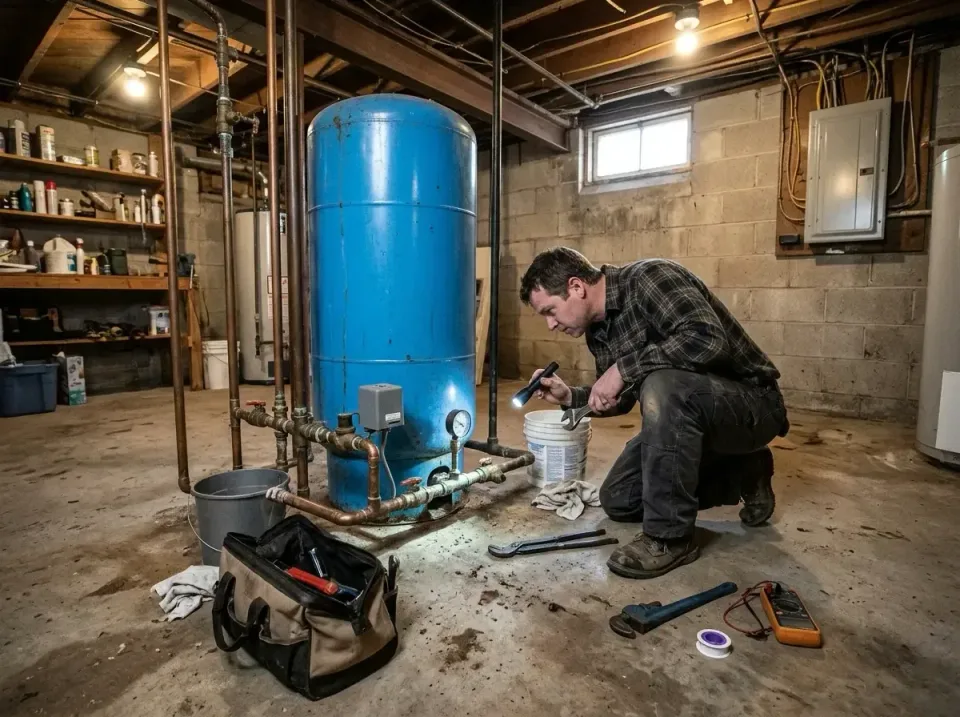
Water Booster Pump Installation
We install residential booster pumps sized to household demand; Colorado jobs typically run $800–$2,500, with pump capacity and electrical work affecting the total. Dry air makes open plumbing work evaporate faster.
A weak stream throughout the house can point to a Well-X-Trol tank problem, but a tank is not the only possible cause. A failing bladder, incorrect precharge, or pressure-switch issue can change how a well system delivers water, so testing matters before parts are replaced.
Black Canyon of the Gunnison National Park is a familiar Colorado landmark, while spring snowmelt near a home can raise groundwater around foundations and make a leak or damp pump area harder to interpret. Low humidity can also build static and dust indoors; protect exposed equipment and nearby electronics during inspection. Check the gauge and note when the symptom occurs. Don’t assume the tank is at fault.
Yes, a damaged or waterlogged Well-X-Trol tank can contribute to low or inconsistent pressure, especially if the system’s pressure falls quickly between pump cycles. The tank stores water against an air cushion; if its bladder fails or its air charge is wrong, the well pump may cycle more often and pressure can feel uneven. A pressure gauge reading that drops rapidly while water is being used is useful evidence, but it does not prove the tank is the only fault.
We check the tank, pressure switch, pump response, and gauge together. A tank problem can resemble a pump or switch problem, and replacing the tank without checking those parts can leave the original symptom in place.
Colorado’s freeze-thaw cycles can stress buried water lines, so a pressure loss may also involve a leak beyond the tank. Near Boulder Pearl Street Mall, as in other Colorado settings, low pressure should be diagnosed at the home rather than inferred from a location or a single fixture.
Colorado National Monument is another local point of reference; drought conditions can make water conservation a concern, but they do not establish that a tank is faulty.
Record pressure when no water is running, then observe the gauge while a fixture runs and as the pump starts and stops. That comparison distinguishes static water pressure from dynamic water pressure. Common well switch settings are 30/50 psi or 40/60 psi; the pump cut-in and cut-out points should agree with the installed switch, not a guess.
A tank’s precharge is generally set about 2 psi below the switch cut-in, but it must be measured with the water side depressurized. Don’t adjust a charged system based on a casual gauge glance.
At Colorado State Capitol or Colorado State University, those names are simply familiar landmarks; in a home, the useful evidence is a stable gauge reading and correctly matched controls. If the gauge needle keeps bouncing or the pump cycles every few minutes, our crew tests the system before recommending Pressure Tank Repair.
See why a well pump cycles every few minutes for that related symptom.
DIY testing and call a plumber?
You can check whether the problem affects one faucet or several, look for a closed accessible shutoff, and write down gauge readings. That is a sensible first step. Do not open an electrical control box or adjust pressure-switch contacts unless you are qualified to work on that equipment; incorrect adjustments can damage the pump or create an unsafe condition.
Call a professional if pressure stays low across multiple fixtures, the pump short-cycles, the gauge behaves erratically, or water appears around the tank. Maroon Bells and Mesa Verde Visitor and Research Center are recognizable Colorado destinations, but homes across the state have different well layouts and access conditions.
Our Colorado-licensed plumbing professionals diagnose before recommending a repair, explain findings plainly, and protect the work area. For a symptom that began suddenly, compare your observations with what to check when water pressure suddenly falls.
A useful diagnosis checks the gauge against system behavior, verifies pressure-switch operation, and tests the tank precharge with water pressure relieved. The technician also looks for visible leaks, confirms that the pump can reach its cut-out point, and checks whether pressure holds after the pump stops. One skipped step measuring precharge while the tank is still pressurized can produce a misleading result.
Colorado Plumbing Pros has served Colorado for more than 12 years, and our process is to identify the likely cause and explain options before work begins. If a tank replacement is indicated, tank capacity and plumbing changes affect the job; a pressure tank may range from 20 to 80 gallons.
The Colorado State Plumbing Board sets contractor licensing requirements, and regulated plumbing work may also involve applicable local permitting. We keep the diagnosis focused on the actual well system, not an assumed part failure.
If the pump cycles often and pressure swings through several fixtures, the tank or its controls deserve attention; a weak single faucet may have a local restriction instead. The right repair follows the test result, not the brand name on the tank.
Denver International Airport and Denver Union Station are useful local reference points, but equipment access at each home determines the work. In high-altitude areas, stronger UV exposure and freeze risk can matter for exposed equipment, so protect outdoor components.
Monsoon-season storms may restrict outdoor service work and affect access to a well or service line.
| Option | Best for | Key detail |
|---|---|---|
| Pressure tank repair | Frequent pump cycling or unstable pressure | Tank capacity commonly ranges from 20–80 gallons |
| Well pump repair | Pump cannot reach or hold expected pressure | Test pump operation with the switch and gauge |
| Booster pump installation | Supply remains inadequate after diagnosis | Typical equipment ranges from ⅓–2 horsepower |
| Water service line repair | Suspected restriction or leak on a municipal feed | Service lines commonly measure ¾–2 inches |
| Fixture troubleshooting | One faucet has weak flow | Aerator cleaning may restore flow without line work |
Ask which reading supports the recommendation.
Confirm the water source: Tell the plumber whether the home uses a private well or utility supply; the test path differs.
Note the symptoms: Record which fixtures are weak and whether the pump cycles while water runs.
Clear access: Move stored items away from the tank, gauge, and shutoff; keep floors near the equipment protected.
Keep electrical covers closed: Do not open a pump control enclosure; let a qualified professional isolate power before internal work.
Schedule around occupants: Pressure testing or repairs may interrupt water, so plan a convenient window with everyone at home.
Share readings: If already available, report gauge behavior without changing settings; verify the gauge is rated for the system’s pressure.
Cold snaps can freeze shallow service lines, so mention any exposed piping near the tank. Eastern plains winds and rapid temperature swings can complicate outdoor access.
Garden of the Gods and Manitou Incline are Colorado landmarks, not service conditions; the practical concern is hail, which can damage exposed vents or equipment. Dry air evaporates water from open plumbing work quickly, so keep the area orderly and avoid leaving opened components exposed.
Yes, a weak tank or incorrect system settings can contribute to pressure sag when demand rises, but a restricted pipe or pump issue can look similar. Mountain communities can receive heavier snowfall than the eastern plains, so if outdoor access is needed, arrange a safe path to the equipment and allow for weather-related delays.
Well-X-Trol tank causing low water pressure?
Pressure diagnosis commonly costs $75–$200, with access and testing time affecting the charge; pressure tank replacement is commonly $400–$1,200, depending on tank capacity and plumbing changes. Snowfall can delay excavation or equipment delivery if testing uncovers a buried-line issue, so ask what the proposed scope includes before approving work.
No, do not adjust the precharge while the water side is pressurized or open pump electrical controls without proper qualifications. Colorado Plumbing Pros can test the tank safely and explain whether the issue calls for tank work or Well Pump Repair; Red Rocks Amphitheatre is a familiar landmark, but the system readings not the home’s location determine the repair.
Denver plumbing permits apply to regulated plumbing work, and the 2022 Denver Building and Fire Code plumbing provisions govern applicable requirements. Colorado State Plumbing Board contractor licensing requirements also matter; Colorado Plumbing Pros can clarify the scope before work, while the Durango and Silverton Narrow Gauge Railroad is a regional landmark rather than a permit authority.
Pressure Switch Repair if my tank causes low pressure?
Only if testing shows the pressure switch is not starting or stopping the pump at the intended points; tank symptoms alone do not confirm switch failure. Steamboat Springs and Vail Village sit in areas where snow conditions can affect access, and Ball Arena is a Denver landmark; for service planning, report pump cycling and gauge readings so the diagnosis can focus on the actual fault.
A Well-X-Trol tank can contribute to weak or uneven pressure when its bladder or air charge is compromised, but the pump, switch, gauge, or piping may also be responsible. A proper test prevents a tank replacement from becoming a guess.
Colorado’s four distinct seasons can affect outdoor plumbing access, so give the crew a clear description of the symptom and any exposed equipment. Summer thunderstorms can bring hail and flash flooding, making outdoor inspections harder; winter freezes can burst exposed pipes, so report visible damage promptly.
Around Leadville Historic District and Pueblo Riverwalk, as throughout the state, access and weather can shape the visit. For diagnosis and a clear repair plan, contact Colorado Plumbing Pros at (877) 773-0781 or request Pressure Tank Repair.
Yes, a weak tank or incorrect system settings can contribute to pressure sag when demand rises, but a restricted pipe or pump issue can look similar. Mountain communities can receive heavier snowfall than the eastern plains, so if outdoor access is needed, arrange a safe path to the equipment and allow for weather-related delays.
Pressure diagnosis commonly costs $75–$200, with access and testing time affecting the charge; pressure tank replacement is commonly $400–$1,200, depending on tank capacity and plumbing changes. Snowfall can delay excavation or equipment delivery if testing uncovers a buried-line issue, so ask what the proposed scope includes before approving work.
No, do not adjust the precharge while the water side is pressurized or open pump electrical controls without proper qualifications. Colorado Plumbing Pros can test the tank safely and explain whether the issue calls for tank work or Well Pump Repair; Red Rocks Amphitheatre is a familiar landmark, but the system readings not the home’s location determine the repair.
Denver plumbing permits apply to regulated plumbing work, and the 2022 Denver Building and Fire Code plumbing provisions govern applicable requirements. Colorado State Plumbing Board contractor licensing requirements also matter; Colorado Plumbing Pros can clarify the scope before work, while the Durango and Silverton Narrow Gauge Railroad is a regional landmark rather than a permit authority.
Only if testing shows the pressure switch is not starting or stopping the pump at the intended points; tank symptoms alone do not confirm switch failure. Steamboat Springs and Vail Village sit in areas where snow conditions can affect access, and Ball Arena is a Denver landmark; for service planning, report pump cycling and gauge readings so the diagnosis can focus on the actual fault.
Browse all nationwide service options and choose the right fit for your project.
We install residential booster pumps sized to household demand; Colorado jobs typically run $800–$2,500, with pump capacity and electrical work affecting the total. Dry air makes open plumbing work evaporate faster.
Pressure tank repair covers bladder and connection issues for homes and well systems; typical replacement runs $450–$1,300, depending on tank size and plumbing changes.
We inspect and repair residential pressure regulators, including valve adjustments and replacements; typical replacement runs $300–$800, depending on valve size and access. Aspen Mountain, Cheyenne Mountain Zoo, and t...
Well Pump Repair covers residential pump and control troubleshooting; typical repairs run $300–$1,500, depending on pump type, parts, and access.
Weak faucet pressure repair for homeowners includes faucet flow checks and targeted adjustments; access and fixture condition shape the scope.
We trace sudden whole-house pressure loss, from a pressure reading to accessible plumbing checks; diagnosis cost depends on access and testing time.
Low Shower Pressure Repair addresses weak shower flow, including showerhead and fixture checks; typical jobs run $125–$350, with access and repair scope affecting cost.
We diagnose weak hot-water flow for homeowners, checking fixture passages and hot-side piping; scope and access determine the repair quote.
We locate and repair leaking residential water lines, including buried sections; excavation length and surface restoration shape typical $500–$3,000 jobs.
Low Cold Water Pressure Repair tracks weak cold flow at fixtures and supply lines; scope and access determine the job cost. Snowfall near Pikes Peak can delay equipment delivery.
We clear blockages in residential water lines; typical jobs run $300–$1,500, depending on access and the clog’s location.
We repair corroded residential pipes, including accessible copper sections; typical jobs run $500–$2,500, depending on pipe length and access.
We clear mineral grit and debris from faucet aerators for homeowners; access, screen condition, and replacement parts shape typical $90–$250 jobs.
We replace home water-filter cartridges and housings; typical jobs run about $150–$500, depending on filter type and access.
We clear mineral scale and debris from residential showerheads; typical repairs run $75–$250, depending on access and buildup.
We repair residential water service lines, including buried pipe sections; Colorado jobs typically run $500–$3,000, driven by excavation length and surface restoration.
We repair well pressure switches for homeowners, checking contacts and settings; typical repairs run $150–$500, depending on access and switch condition. Hail near Telluride Historic District can damage exposed equipm...
We repair residential water softeners, including control valves and regeneration components; typical repair pricing depends on system size, parts, and access.
Select a city to find local low water pressure repair providers we cover in Colorado.
Share your job scope for low water pressure repair in Colorado — we will review fit and pricing before scheduling.