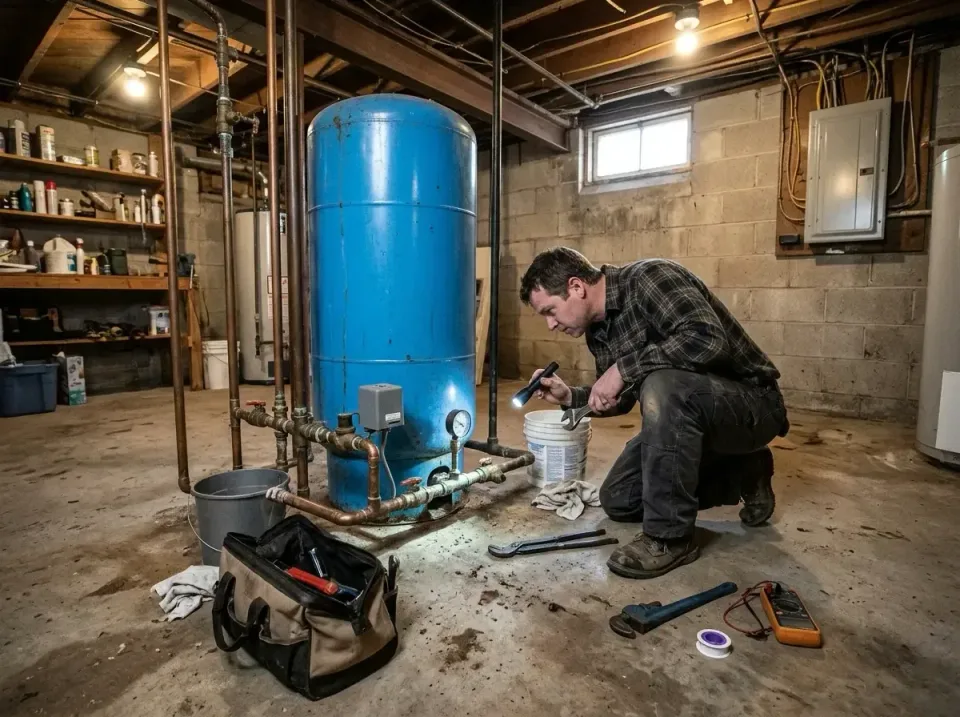
Water Booster Pump Installation
We install residential booster pumps sized to household demand; Colorado jobs typically run $800–$2,500, with pump capacity and electrical work affecting the total. Dry air makes open plumbing work evaporate faster.
If water pressure suddenly falls throughout your house, first check whether every fixture is affected and whether a shutoff valve has moved. A single weak faucet points toward a local restriction; a whole-house change can involve the supply, regulator, or piping. Start with safe observations, not adjustments to equipment you cannot identify.
Look for damp areas, listen for running water, and ask whether a neighbor has the same problem. Denver Union Station is a familiar reminder that Colorado homes and properties sit across varied terrain, but the cause at your house still needs testing.
Freeze-thaw movement can strain buried water lines, so note any new wet spots near the service route. Cold snaps can freeze shallow service lines and make an outdoor supply problem look like an indoor plumbing failure. Check the meter and shutoff access, then record which fixtures are affected before calling.
When water pressure suddenly falls throughout the house, compare a nearby cold tap, a hot tap, and a fixture on another floor. If only one faucet is weak, clean its aerator and check whether its shutoff valve is fully open; if several fixtures changed together, look upstream instead.
A shower that weakens when another tap runs can indicate a supply or flow restriction rather than a faulty showerhead. Keep notes on when the drop began and which fixtures are affected. That pattern helps narrow the diagnosis before parts are changed.
We often find that a pressure gauge reading alone misses the problem: static pressure can look acceptable while pressure drops as water flows. If the symptom is isolated upstairs, see our guide to why upstairs faucets barely produce a stream.
A new wet patch, unusually soft ground, or unexplained water use near the service route deserves attention. A pipe inspection camera may help locate an interior obstruction, while a service-line assessment can separate a private pipe problem from a utility-side issue. Ask before excavation whether the route has been identified and what surface restoration may involve.
Removed copper and steel pipe can leave an opening for comparison with the replacement material and diameter; keep any removed section if a plumber asks to inspect it. At a home near the Colorado Springs Pioneers Museum, the landmark itself does not diagnose plumbing, but it is a useful local reference when arranging service. Coors Field is another recognizable Colorado location; for a house nearby or farther away, the important field detail remains the same: identify the affected line before opening walls or ground.
DIY checks and call a plumber?
Safe checks include comparing fixtures, confirming that a visible shutoff is open, and checking for obvious leaks. Stop if a valve is corroded, a pipe is wet or damaged, a pump repeatedly cycles, or the pressure loss affects the whole house.
Do not open electrical pump enclosures or adjust an unfamiliar regulator. Drought conditions can increase water-conservation concerns, but that does not make unexplained pressure loss something to ignore; a leak can waste water even when the stream feels weak.
Dry air increases evaporation from open plumbing work, so exposed repairs may need prompt attention rather than being left open while parts are gathered. Our crew diagnoses first, explains the likely cause, and gives a repair plan before work starts. For hot-water-only symptoms, compare your findings with why hot water pressure is lower than cold.
A line serving a mountain home may be harder to access after heavy snowfall than a similar line on the eastern plains. Mountain communities face heavier snowfall, which can delay digging and make safe access to buried piping difficult. Before approving excavation, ask how weather could affect access, equipment delivery, and restoration timing.
A home near the Great Sand Dunes Visitor Center may face different site conditions from a property near Manitou Incline, but both need a diagnosis based on the actual pipe route and symptoms. At higher elevations, an outdoor inspection can also involve exposed equipment and changing conditions; protect accessible components and tell the plumber when the pressure change began. For a well system, repeated cycling warrants a separate check of the pump and tank rather than simply raising a setting.
If multiple taps go weak at once, the right fix depends on whether the restriction is at the regulator, pump, tank, fixture, or service line. These options address different causes; the table is a starting point, not a diagnosis.
| Option | Best for | Key detail |
|---|---|---|
| Regulator repair | Pressure changes across a home supplied by a regulated system | Regulators commonly measure ¾–1 inch; confirm size before replacement. |
| Booster pump installation | Supply pressure is inadequate for the property | Booster pumps range from ⅓–2 horsepower; sizing depends on demand. |
| Well pump or tank repair | A private well system cycles or loses usable pressure | Pressure tanks commonly hold 20–80 gallons; verify system components together. |
| Fixture troubleshooting | One faucet has weak flow | Cleaning an aerator may restore flow without opening a supply line. |
| Service-line repair | A restriction or leak is suspected between source and home | Service lines commonly range from ¾–2 inches; verify pipe material and diameter first. |
In multifamily apartments, ask building management whether neighboring units are affected before arranging a private repair. Steamboat Springs and Aspen Mountain are familiar mountain references, where snowfall can delay excavation or equipment delivery. A home near the University of Colorado Boulder may share a building supply arrangement; confirm who controls the affected line.
A few observations make diagnosis safer and more useful. Do not dismantle a pump or regulator to gather readings.
Locate the shutoff: Find the main shutoff before testing and make sure it is accessible without forcing a stuck valve.
Compare fixtures: Check at least one hot and one cold tap in different parts of the home, then write down what changed.
Identify the supply: Confirm whether the property uses a utility supply or a private well so the diagnosis follows the right path.
Prepare the work area: Clear access to the meter or equipment and protect floors near a pump or tank; tell occupants if water may be interrupted.
Keep the route clear: Leave the likely service-line excavation path accessible and ask the plumber to coordinate a utility locate before digging.
Spring snowmelt may raise groundwater around foundations, so mention soggy ground or water near the house when scheduling. If your route passes near Ball Arena, Cheyenne Mountain Zoo, the Durango and Silverton Narrow Gauge Railroad, Glenwood Hot Springs Pool, or Grand Junction Main Street, use the landmark only to help describe the area not as a substitute for the property address. Keep a record of symptoms and any work completed.
A storm-related drop may point to exposed equipment or an outdoor supply problem, so note whether the change began during the weather event and which fixtures are affected. Summer thunderstorms can bring hail and flash flooding; avoid inspecting flooded or electrically powered equipment yourself.
Pressure diagnosis is commonly $75–$200, with access and testing time affecting the charge; regulator replacement is commonly $300–$800, depending on valve size and access. Ask for findings and a written scope before approving a repair, since a service-line issue is a different job.
Yes, you can compare several faucets, check for visible leaks, and confirm an accessible shutoff is open without forcing it. Call Colorado Plumbing Pros if the whole house is affected, a line appears damaged, or pump equipment needs inspection; winter freezes can burst exposed pipes and make a small leak worse.
Water Pressure Repair involving pipe work?
Denver plumbing permits are required for regulated plumbing work, and applicable work must follow the 2022 Denver Building and Fire Code plumbing provisions. Before excavation, Colorado 811 utility locate requirements also matter; ask the contractor to confirm the permit and locate steps for the proposed repair.
Yes, Corroded Pipe Repair may be appropriate when inspection finds an internal restriction, but low pressure alone does not prove corrosion. Monsoon-season storms can restrict outdoor service work, so tell the plumber if excavation or exterior access may be needed and arrange an assessment before replacing pipe.
A sudden pressure change is a symptom, not a diagnosis. If several fixtures are affected, a gauge test and inspection can distinguish a supply issue from a regulator, pump, or pipe problem.
Four distinct seasons affect outdoor plumbing access, so exposed or buried equipment may be harder to reach at some times of year. High altitude can increase UV exposure and freeze risk for outdoor components; tell the plumber if equipment sits exposed.
| Check Useful | reference |
|---|---|
| Household pressure | Common residential range: 40–80 psi |
| Static pressure limit | Model plumbing codes generally limit it to 80 psi |
| Elevation effect | Pressure falls about 0.433 psi per vertical foot |
If the drop persists, contact Colorado Plumbing Pros about Low Water Pressure Repair. We’ll identify the likely cause, explain options in plain language, and outline a plan before work begins.
A storm-related drop may point to exposed equipment or an outdoor supply problem, so note whether the change began during the weather event and which fixtures are affected. Summer thunderstorms can bring hail and flash flooding; avoid inspecting flooded or electrically powered equipment yourself.
Pressure diagnosis is commonly $75–$200, with access and testing time affecting the charge; regulator replacement is commonly $300–$800, depending on valve size and access. Ask for findings and a written scope before approving a repair, since a service-line issue is a different job.
Yes, you can compare several faucets, check for visible leaks, and confirm an accessible shutoff is open without forcing it. Call Colorado Plumbing Pros if the whole house is affected, a line appears damaged, or pump equipment needs inspection; winter freezes can burst exposed pipes and make a small leak worse.
Denver plumbing permits are required for regulated plumbing work, and applicable work must follow the 2022 Denver Building and Fire Code plumbing provisions. Before excavation, Colorado 811 utility locate requirements also matter; ask the contractor to confirm the permit and locate steps for the proposed repair.
Yes, Corroded Pipe Repair may be appropriate when inspection finds an internal restriction, but low pressure alone does not prove corrosion. Monsoon-season storms can restrict outdoor service work, so tell the plumber if excavation or exterior access may be needed and arrange an assessment before replacing pipe.
Browse all nationwide service options and choose the right fit for your project.
We install residential booster pumps sized to household demand; Colorado jobs typically run $800–$2,500, with pump capacity and electrical work affecting the total. Dry air makes open plumbing work evaporate faster.
Pressure tank repair covers bladder and connection issues for homes and well systems; typical replacement runs $450–$1,300, depending on tank size and plumbing changes.
We inspect and repair residential pressure regulators, including valve adjustments and replacements; typical replacement runs $300–$800, depending on valve size and access. Aspen Mountain, Cheyenne Mountain Zoo, and t...
Well Pump Repair covers residential pump and control troubleshooting; typical repairs run $300–$1,500, depending on pump type, parts, and access.
Weak faucet pressure repair for homeowners includes faucet flow checks and targeted adjustments; access and fixture condition shape the scope.
We trace sudden whole-house pressure loss, from a pressure reading to accessible plumbing checks; diagnosis cost depends on access and testing time.
Low Shower Pressure Repair addresses weak shower flow, including showerhead and fixture checks; typical jobs run $125–$350, with access and repair scope affecting cost.
We diagnose weak hot-water flow for homeowners, checking fixture passages and hot-side piping; scope and access determine the repair quote.
We locate and repair leaking residential water lines, including buried sections; excavation length and surface restoration shape typical $500–$3,000 jobs.
Low Cold Water Pressure Repair tracks weak cold flow at fixtures and supply lines; scope and access determine the job cost. Snowfall near Pikes Peak can delay equipment delivery.
We clear blockages in residential water lines; typical jobs run $300–$1,500, depending on access and the clog’s location.
We repair corroded residential pipes, including accessible copper sections; typical jobs run $500–$2,500, depending on pipe length and access.
We clear mineral grit and debris from faucet aerators for homeowners; access, screen condition, and replacement parts shape typical $90–$250 jobs.
We replace home water-filter cartridges and housings; typical jobs run about $150–$500, depending on filter type and access.
We clear mineral scale and debris from residential showerheads; typical repairs run $75–$250, depending on access and buildup.
We repair residential water service lines, including buried pipe sections; Colorado jobs typically run $500–$3,000, driven by excavation length and surface restoration.
We repair well pressure switches for homeowners, checking contacts and settings; typical repairs run $150–$500, depending on access and switch condition. Hail near Telluride Historic District can damage exposed equipm...
We repair residential water softeners, including control valves and regeneration components; typical repair pricing depends on system size, parts, and access.
Select a city to find local low water pressure repair providers we cover in Colorado.
Share your job scope for low water pressure repair in Colorado — we will review fit and pricing before scheduling.