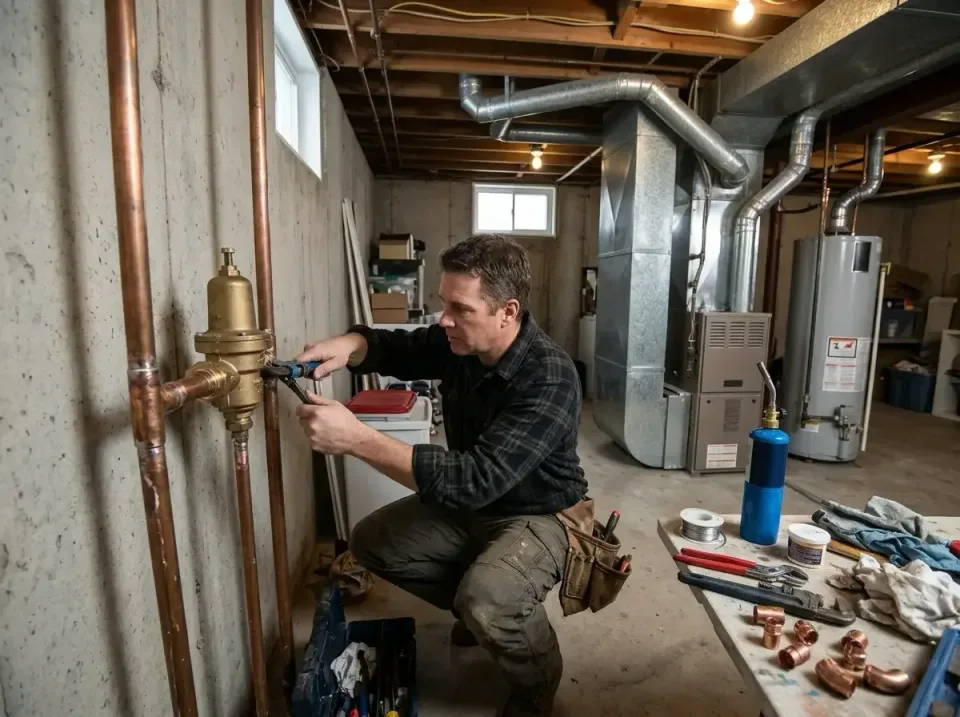
Water Booster Pump Installation
We install residential booster pumps sized to household demand; Colorado jobs typically run $800–$2,500, with pump capacity and electrical work affecting the total. Dry air makes open plumbing work evaporate faster.
A shower that weakens when another tap runs, or pressure that suddenly drops throughout the house, can point to a failing regulator but the valve is not the only possible cause. A pressure regulator installation controls incoming flow; when its internal parts stick or wear, a plumber can test whether adjustment will restore steady service or replacement is needed.
Repair first when testing shows the valve is sound and can be set correctly; replacing it without that check can mean paying for a part that was not the problem. At Rocky Mountain National Park, winter conditions make outdoor plumbing access harder, and Colorado’s four distinct seasons can complicate work on exposed equipment. We begin with measurements, then explain the options. A few clues help frame the visit:
One fixture is weak: A localized problem may be at the fixture, not the regulator.
Several fixtures change together: Ask for a whole-system pressure check before authorizing a valve.
Pressure varies: Note when it happens and which taps or appliances are running.
Keep a short symptom log for the plumber.
If water pressure suddenly fell throughout the house, a pressure-reducing valve may be stuck, worn, or set incorrectly. But a similar symptom can come from a supply restriction, so replacing the regulator on sight is a poor first move.
Our crew checks pressure at more than one point and compares readings while fixtures are running; that building-wide pressure assessment helps distinguish a valve fault from a broader supply problem. It also gives the homeowner a record to compare after work.
Colorado homes differ in age and layout, so we look at the system in place rather than assuming one symptom has one cause. Start with evidence.
When a well pump cycles every few minutes, pressure tank air charge and pump cycling deserve attention too. A tank that cannot hold its air cushion may cause rapid starts and uneven delivery, even when the regulator is working.
We check how the pump behaves alongside the pressure readings before recommending a valve repair. If the pump starts and stops repeatedly, shutting down without a diagnosis can leave the underlying fault unresolved.
Residents near the Colorado Springs Pioneers Museum may be in different kinds of homes, but the same careful comparison of pump and house-side readings helps narrow the cause. Colorado’s high altitude can increase freeze risk, so outdoor components deserve a visual check when accessible.
Yes, adjustment can be enough when testing shows the regulator is intact and responds normally. A technician can make a controlled change and verify the result at fixtures; turning the adjustment screw without measuring can leave pressure inconsistent or too high.
We explain the reading and proposed setting before changing it. If adjustment does not hold, internal wear or a damaged diaphragm may make a new valve the more dependable choice.
That is repair before unnecessary replacement: confirm a fixable setting issue before charging for a new assembly. The call for a pressure plumber makes sense when the regulator is hard to access, the pressure changes across the home, or testing requires work near the main supply. Do not force a stuck adjustment.
If upstairs faucets barely produce a stream while downstairs fixtures remain usable, a whole-home pressure loss may not be the only explanation. Our plumbing repair process checks the distribution pattern and compares more than one fixture before blaming the regulator.
A pressure difference that appears only at one faucet can lead to wasted valve work if the actual restriction is local. For symptoms that vary by floor, see How Colorado Homeowners Can Diagnose Weak Upstairs Water Pressure. A pressure check should answer a question, not just produce a number.
You can note which fixtures are affected, when pressure changes, and whether the change occurs during household water use. That information helps us reproduce the complaint.
Leave regulator disassembly, internal adjustment, and work on the main supply to a qualified professional; an incorrect change can create a new pressure problem. If a reading fluctuates or several rooms are affected, arrange a building-wide assessment instead of repeatedly turning the valve.
We have spent more than 12 years serving Colorado and diagnose before recommending repairs. For additional symptom guidance, read What to Check When Water Pressure Suddenly Falls or review our Water Pressure Regulator Repair service.
Colorado’s freeze-thaw cycles can stress buried water lines, another reason not to assume every pressure change begins at the regulator.
The right fix depends on where the pressure problem begins: at the regulator, a fixture, a pump system, or the supply line. A mechanical room pressure assessment can help separate those causes, while pressure zone testing compares readings across the home rather than relying on one tap.
If faucet pressure is low at just one outlet, a local restriction may be more likely than a whole-house valve fault. Corroded pipe replacement is considered when inspection points to a damaged section; replacing pipe without locating the restriction can add work without solving the symptom.
| Option | Best for | Key detail |
|---|---|---|
| Regulator repair | Pressure changes affecting several fixtures | Adjustment or repair may restore control if the valve is serviceable. |
| Regulator replacement | A regulator that fails testing or will not hold adjustment | Match the new valve to the existing connection and system. |
| Booster pump installation | Inadequate incoming supply after diagnosis | Booster size should fit the property’s demand. |
| Well pump or tank repair | Pressure changes tied to a private well system | Assess the pump and tank together. |
| Fixture pressure troubleshooting | One weak faucet or outlet | Check the fixture before pursuing larger repairs. |
Colorado State University is a familiar local reference point, but the home’s measured pressure pattern not its neighborhood is what guides our repair decision.
If a regulator is difficult to reach or water must be shut off, a little preparation can help the visit go smoothly. Clear the area and tell everyone in the home before service interrupts water.
Colorado National Monument is a reminder that outdoor access and equipment conditions vary across the state; repair cost can also change with access and the work required. Here is a useful preparation sequence:
Note the symptoms: Write down which fixtures are weak and when the change occurs.
Clear access: Move stored items away from the water meter and regulator.
Confirm the source: Tell the plumber whether the home uses utility water or a well.
Plan for interruption: Arrange a suitable time to have water shut off if needed.
Protect nearby areas: Move belongings away from the work area and cover vulnerable flooring.
Keep access open: If work may involve the outdoor service line, leave its path accessible.
Colorado plumbing work should be planned around the actual system and access. Ask what will be tested, what the readings show, and whether repair or replacement is recommended.
Yes, a regulator problem can become more noticeable under combined demand, but the symptom alone does not confirm the valve is at fault. An adjustable pressure-reducing valve should be assessed with a pressure test, and Denver Community Planning and Development can clarify permit requirements for regulated plumbing work in Denver.
Pressure regulator replacement typically costs $300–$800, with valve size and access affecting the quote. Pressure diagnosis is commonly $75–$200 based on access and testing time; Colorado Plumbing Pros can explain the findings and cost drivers before you approve work.
You can record which faucets are weak, but a pressure regulator adjustment should follow a measured test rather than trial and error. If several fixtures are affected, contact Colorado Plumbing Pros to review the readings; Denver International Airport is one familiar regional landmark, but your home’s actual test results guide the diagnosis.
Some regulated plumbing work in Denver requires permits, so confirm the project requirements with Denver Community Planning and Development before work begins. Denver plumbing permits are tied to applicable code provisions, including the 2022 Denver Building and Fire Code plumbing provisions; contractor licensing requirements are set by the Colorado State Plumbing Board.
Yes, a well pressure tank problem can contribute to cycling or uneven pressure, so the tank and regulator should not be treated as interchangeable parts. If the well pump cycles every few minutes, ask for a system diagnosis; a Water Pressure Regulator Repair visit can identify whether the regulator or another component needs attention.
A weak shower or uneven pressure does not automatically mean the regulator needs replacing. Ask for a pressure test and a plain-language explanation of what the readings show; that can distinguish an adjustment from a valve failure or another source of trouble.
Cold snaps can freeze shallow service lines, so tell the plumber if pressure changed after severe weather or if outdoor piping is exposed. Our crew will identify the likely cause, explain repair options, and lay out a plan before work begins.
Colorado Plumbing Pros serves homeowners across Colorado with Colorado-licensed plumbing professionals. For a calm next step, request an evaluation through our Water Pressure Regulator Repair service or call (877) 773-0781.
Yes, a regulator problem can become more noticeable under combined demand, but the symptom alone does not confirm the valve is at fault. An adjustable pressure-reducing valve should be assessed with a pressure test, and Denver Community Planning and Development can clarify permit requirements for regulated plumbing work in Denver.
Pressure regulator replacement typically costs $300–$800, with valve size and access affecting the quote. Pressure diagnosis is commonly $75–$200 based on access and testing time; Colorado Plumbing Pros can explain the findings and cost drivers before you approve work.
You can record which faucets are weak, but a pressure regulator adjustment should follow a measured test rather than trial and error. If several fixtures are affected, contact Colorado Plumbing Pros to review the readings; Denver International Airport is one familiar regional landmark, but your home’s actual test results guide the diagnosis.
Some regulated plumbing work in Denver requires permits, so confirm the project requirements with Denver Community Planning and Development before work begins. Denver plumbing permits are tied to applicable code provisions, including the 2022 Denver Building and Fire Code plumbing provisions; contractor licensing requirements are set by the Colorado State Plumbing Board.
Yes, a well pressure tank problem can contribute to cycling or uneven pressure, so the tank and regulator should not be treated as interchangeable parts. If the well pump cycles every few minutes, ask for a system diagnosis; a Water Pressure Regulator Repair visit can identify whether the regulator or another component needs attention.
Browse all nationwide service options and choose the right fit for your project.
We install residential booster pumps sized to household demand; Colorado jobs typically run $800–$2,500, with pump capacity and electrical work affecting the total. Dry air makes open plumbing work evaporate faster.
Pressure tank repair covers bladder and connection issues for homes and well systems; typical replacement runs $450–$1,300, depending on tank size and plumbing changes.
We inspect and repair residential pressure regulators, including valve adjustments and replacements; typical replacement runs $300–$800, depending on valve size and access. Aspen Mountain, Cheyenne Mountain Zoo, and t...
Well Pump Repair covers residential pump and control troubleshooting; typical repairs run $300–$1,500, depending on pump type, parts, and access.
Weak faucet pressure repair for homeowners includes faucet flow checks and targeted adjustments; access and fixture condition shape the scope.
We trace sudden whole-house pressure loss, from a pressure reading to accessible plumbing checks; diagnosis cost depends on access and testing time.
Low Shower Pressure Repair addresses weak shower flow, including showerhead and fixture checks; typical jobs run $125–$350, with access and repair scope affecting cost.
We diagnose weak hot-water flow for homeowners, checking fixture passages and hot-side piping; scope and access determine the repair quote.
We locate and repair leaking residential water lines, including buried sections; excavation length and surface restoration shape typical $500–$3,000 jobs.
Low Cold Water Pressure Repair tracks weak cold flow at fixtures and supply lines; scope and access determine the job cost. Snowfall near Pikes Peak can delay equipment delivery.
We clear blockages in residential water lines; typical jobs run $300–$1,500, depending on access and the clog’s location.
We repair corroded residential pipes, including accessible copper sections; typical jobs run $500–$2,500, depending on pipe length and access.
We clear mineral grit and debris from faucet aerators for homeowners; access, screen condition, and replacement parts shape typical $90–$250 jobs.
We replace home water-filter cartridges and housings; typical jobs run about $150–$500, depending on filter type and access.
We clear mineral scale and debris from residential showerheads; typical repairs run $75–$250, depending on access and buildup.
We repair residential water service lines, including buried pipe sections; Colorado jobs typically run $500–$3,000, driven by excavation length and surface restoration.
We repair well pressure switches for homeowners, checking contacts and settings; typical repairs run $150–$500, depending on access and switch condition. Hail near Telluride Historic District can damage exposed equipm...
We repair residential water softeners, including control valves and regeneration components; typical repair pricing depends on system size, parts, and access.
Select a city to find local low water pressure repair providers we cover in Colorado.
Share your job scope for low water pressure repair in Colorado — we will review fit and pricing before scheduling.