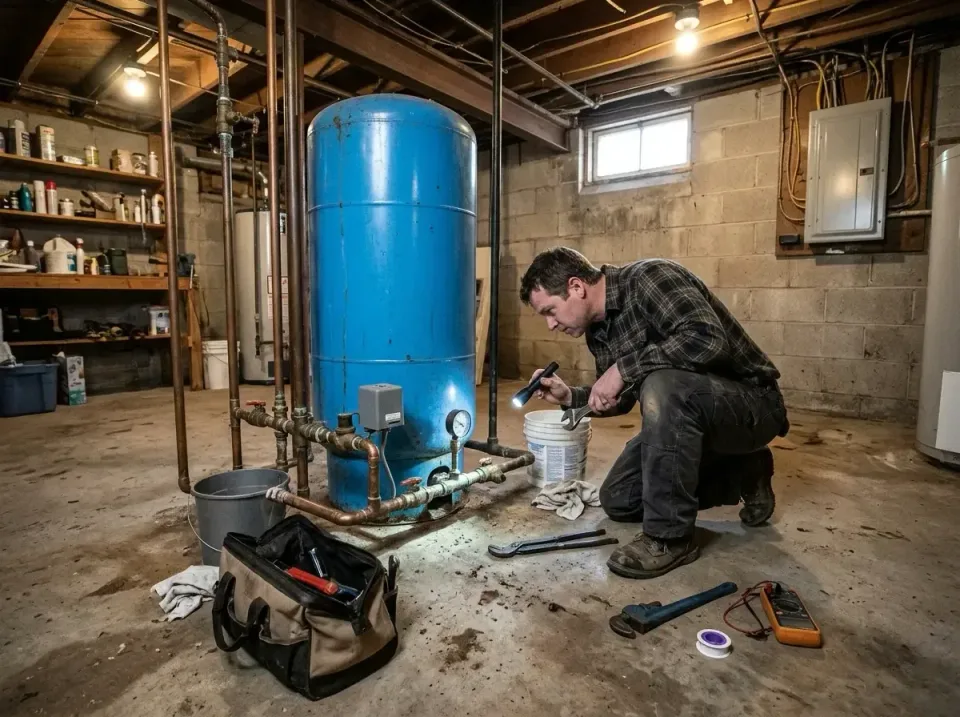
Water Booster Pump Installation
We install residential booster pumps sized to household demand; Colorado jobs typically run $800–$2,500, with pump capacity and electrical work affecting the total. Dry air makes open plumbing work evaporate faster.
When hot water runs weaker than cold, the restriction is often somewhere on the hot-water path: a partly closed valve, mineral buildup, or a narrowing pipe. Start by comparing hot and cold flow at several fixtures; if only one tap is affected, the trouble is likely local to that fixture. A whole-house difference calls for broader testing.
One fixture only: Check whether its aerator or showerhead is obstructed before assuming a system problem.
Every hot tap: A shared restriction near the water heater or in hot-water piping is more likely.
Recent change: Note whether the drop followed plumbing work, a leak, or a freeze.
Colorado cold snaps can freeze shallow service lines, so a sudden change after freezing weather deserves prompt attention. Freeze-thaw stress can also affect buried lines; if the symptoms suggest a service-line issue, avoid digging until utilities are located.
In mountain areas with heavier snowfall, access to outdoor plumbing may take extra planning. Rocky Mountain National Park is a familiar reminder of Colorado’s varied mountain conditions. Record which fixtures are affected, then have the cause checked before replacing parts.
If cold flow is normal but hot flow is weak at one faucet, inspect that fixture first. Sediment can collect in an aerator or showerhead, while a fixture stop valve may not be fully open. Compare a second hot tap before making assumptions. A single affected fixture usually points away from a whole-house pressure problem.
When several hot fixtures are weak, the restriction may be shared: a valve near the water heater, a clogged section of hot piping, or buildup inside an older pipe. We compare flow at multiple fixtures and check accessible valves before recommending a repair. The pattern matters. A slow kitchen faucet alone is different from weak hot water at every bathroom and shower.
A visit to Glenwood Hot Springs Pool may put hot water on your mind, but a home’s hot-side pressure depends on its plumbing path, not the pool’s supply. We look for a restriction between the heater and fixtures and check whether the symptom changes with use. Hot summer afternoons can stress outdoor pump equipment; if a home relies on a pump, heat-related equipment trouble may affect supply and deserves a separate system check.
Weather can also affect exposed equipment. Hail can damage outdoor plumbing vents or equipment, so after a storm, look from the ground for visible damage rather than climbing onto a roof.
In dry Colorado air, open plumbing work can lose moisture quickly; we keep repairs controlled and avoid leaving lines or components exposed longer than needed. Denver Union Station gives a sense of how busy a shared system can be, but at home, testing each fixture helps distinguish a local obstruction from a broader supply issue.
Cleaning a removable aerator or showerhead is a reasonable first step if one outlet has weak hot flow and you can remove the part safely. Stop if the fitting is seized, corroded, leaking, or difficult to access. Do not adjust heater controls or open electrical enclosures to chase a pressure problem.
Call a plumber when multiple hot fixtures are affected, the pressure changed suddenly, or a valve or pipe is leaking. Our crew records the symptom pattern, checks accessible hot-side valves, and explains the likely cause before proposing work.
Colorado Springs’ Garden of the Gods is built from striking natural formations; inside a home, by contrast, even a small deposit can narrow a water passage enough to reduce flow. If the cold side also weakens, the problem may be broader than hot-water piping.
For a related symptom, see why shower pressure drops when other taps run.
A pressure reading can help separate a supply problem from a restriction that affects hot water alone. Our technicians compare readings and fixture flow rather than relying on a single tap’s feel. A pressure gauge must be suited to the expected system pressure, and readings should be taken carefully; a homeowner should not dismantle plumbing to attach one.
Eastern plains winds and rapid temperature changes can make outdoor inspections less comfortable and may complicate access to exposed equipment. If your home is in that region, share any weather-related timing with the plumber.
Colorado National Monument also reflects how varied conditions can be across the state; the right diagnosis still starts at your fixtures. We explain what the test indicates and what remains uncertain before work begins. A repair should address the confirmed restriction, not simply add equipment to compensate for it.
The right option depends on whether weak hot flow is limited to one fixture, affects several hot taps, or accompanies a wider supply problem. Drought conditions may increase household water-conservation concerns, so identify the restriction rather than treating low flow as a reason to waste water. Aspen Mountain, Cheyenne Mountain Zoo, and Fort Collins Old Town are distinct Colorado settings; wherever you live, the fixture pattern not a landmark guides the repair.
| Option | Best for | Key detail |
|---|---|---|
| Fixture pressure troubleshooting | One weak hot faucet or shower | Check the outlet and its accessible shutoff first |
| Water pressure regulator repair | Broader pressure issue affecting hot and cold | Regulators are commonly ¾–1 inch |
| Water service line repair | A confirmed restriction in the incoming line | Service lines commonly measure ¾–2 inches |
| Booster pump installation | Inadequate supply confirmed by testing | Typical pump range is ⅓–2 horsepower |
Horsetooth Reservoir is a useful local reference for water, but a home diagnosis begins with measured flow and the affected fixtures.
A short symptom record helps us focus the inspection. Dry air can increase evaporation from open plumbing work, so we keep any necessary line opening controlled and brief; Estes Park homeowners may also want to mention access constraints when booking.
| Step | What to do |
|---|---|
| 1 | Compare hot and cold flow at two or more fixtures and note which side is weak. |
| 2 | Record whether the issue affects one outlet or every hot tap, and when it began. |
| 3 | Clear access to the water heater and nearby shutoff valves; protect stored items and floors. |
| 4 | Tell occupants if testing may require a brief water interruption and arrange a suitable time. |
| 5 | Leave pump electrical enclosures closed; a professional should isolate power before opening them. |
Coors Field, the Denver Botanic Gardens, and the Colorado Springs Pioneers Museum are recognizable local destinations, but service preparation is practical: clear access and accurate symptom notes save diagnostic time. If work involves excavation, the crew must address Colorado 811 utility locating before digging.
If every hot tap is weak while cold flow remains normal, a shared hot-side valve or pipe restriction is more likely than several clogged fixtures. Spring snowmelt may raise groundwater around foundations, so report damp areas or new leaks rather than assuming groundwater caused the pressure change.
A hot-only drop after replacement can indicate a valve left partly closed, debris moved during the work, or a connection issue that needs checking. Boulder Pearl Street Mall is a local reference, but the useful clue is timing: note when the work occurred and have the installer or a plumber inspect the hot-side connections.
Pressure diagnosis is typically $75–$200, depending on access and testing time; a regulator replacement, if testing supports it, is $300–$800 based on valve size and access. Colorado State University and the Colorado State Capitol are different service settings, so share your location and the affected fixtures when requesting a quote.
You can clean a removable faucet aerator or showerhead if only one outlet is affected and the part comes off safely; call a professional if several hot fixtures are weak, a valve leaks, or the drop came on suddenly. Colorado National Monument offers no guide to a home’s piping, so a clear record of which taps are affected is more useful.
Not every fixture check requires a permit, but Denver plumbing permits apply to regulated plumbing work under the 2022 Denver Building and Fire Code plumbing provisions. For regulated repairs, ask the contractor about permit requirements and applicable lead-free components under the Safe Drinking Water Act; Mesa Verde Visitor and Research Center is a local landmark, not a substitute for checking Denver Community Planning and Development requirements.
A hot-only pressure drop usually points to a restriction along the hot-water route or at an affected fixture, but testing is the way to distinguish those causes. If just one outlet is weak, safely cleaning its removable aerator may help; if several hot taps are affected or the change was sudden, arrange an inspection.
Colorado’s four seasons can affect outdoor plumbing access, and high-altitude conditions can increase UV exposure and freeze risk for exposed components. Monsoon-season storms may also restrict outdoor service work, so mention access concerns when scheduling.
Pueblo Riverwalk and Leadville Historic District are different Colorado settings, just as each home’s plumbing layout is different. Contact Colorado Plumbing Pros at (877) 773-0781 or request Low Hot Water Pressure Repair. We’ll explain the findings and options before work begins.
If every hot tap is weak while cold flow remains normal, a shared hot-side valve or pipe restriction is more likely than several clogged fixtures. Spring snowmelt may raise groundwater around foundations, so report damp areas or new leaks rather than assuming groundwater caused the pressure change.
A hot-only drop after replacement can indicate a valve left partly closed, debris moved during the work, or a connection issue that needs checking. Boulder Pearl Street Mall is a local reference, but the useful clue is timing: note when the work occurred and have the installer or a plumber inspect the hot-side connections.
Pressure diagnosis is typically $75–$200, depending on access and testing time; a regulator replacement, if testing supports it, is $300–$800 based on valve size and access. Colorado State University and the Colorado State Capitol are different service settings, so share your location and the affected fixtures when requesting a quote.
You can clean a removable faucet aerator or showerhead if only one outlet is affected and the part comes off safely; call a professional if several hot fixtures are weak, a valve leaks, or the drop came on suddenly. Colorado National Monument offers no guide to a home’s piping, so a clear record of which taps are affected is more useful.
Not every fixture check requires a permit, but Denver plumbing permits apply to regulated plumbing work under the 2022 Denver Building and Fire Code plumbing provisions. For regulated repairs, ask the contractor about permit requirements and applicable lead-free components under the Safe Drinking Water Act; Mesa Verde Visitor and Research Center is a local landmark, not a substitute for checking Denver Community Planning and Development requirements.
Browse all nationwide service options and choose the right fit for your project.
We install residential booster pumps sized to household demand; Colorado jobs typically run $800–$2,500, with pump capacity and electrical work affecting the total. Dry air makes open plumbing work evaporate faster.
Pressure tank repair covers bladder and connection issues for homes and well systems; typical replacement runs $450–$1,300, depending on tank size and plumbing changes.
We inspect and repair residential pressure regulators, including valve adjustments and replacements; typical replacement runs $300–$800, depending on valve size and access. Aspen Mountain, Cheyenne Mountain Zoo, and t...
Well Pump Repair covers residential pump and control troubleshooting; typical repairs run $300–$1,500, depending on pump type, parts, and access.
Weak faucet pressure repair for homeowners includes faucet flow checks and targeted adjustments; access and fixture condition shape the scope.
We trace sudden whole-house pressure loss, from a pressure reading to accessible plumbing checks; diagnosis cost depends on access and testing time.
Low Shower Pressure Repair addresses weak shower flow, including showerhead and fixture checks; typical jobs run $125–$350, with access and repair scope affecting cost.
We diagnose weak hot-water flow for homeowners, checking fixture passages and hot-side piping; scope and access determine the repair quote.
We locate and repair leaking residential water lines, including buried sections; excavation length and surface restoration shape typical $500–$3,000 jobs.
Low Cold Water Pressure Repair tracks weak cold flow at fixtures and supply lines; scope and access determine the job cost. Snowfall near Pikes Peak can delay equipment delivery.
We clear blockages in residential water lines; typical jobs run $300–$1,500, depending on access and the clog’s location.
We repair corroded residential pipes, including accessible copper sections; typical jobs run $500–$2,500, depending on pipe length and access.
We clear mineral grit and debris from faucet aerators for homeowners; access, screen condition, and replacement parts shape typical $90–$250 jobs.
We replace home water-filter cartridges and housings; typical jobs run about $150–$500, depending on filter type and access.
We clear mineral scale and debris from residential showerheads; typical repairs run $75–$250, depending on access and buildup.
We repair residential water service lines, including buried pipe sections; Colorado jobs typically run $500–$3,000, driven by excavation length and surface restoration.
We repair well pressure switches for homeowners, checking contacts and settings; typical repairs run $150–$500, depending on access and switch condition. Hail near Telluride Historic District can damage exposed equipm...
We repair residential water softeners, including control valves and regeneration components; typical repair pricing depends on system size, parts, and access.
Select a city to find local low water pressure repair providers we cover in Colorado.
Share your job scope for low water pressure repair in Colorado — we will review fit and pricing before scheduling.